



AANSPRAKELIJKHEID VAN DE CURATOR
Bij gebondenheid aan regels geen beleidsvrijheid
Al weer wat jaren geleden schreef ik over tegenstrijdige belangen in het insolventierecht (Tijdschrift voor Insolventierecht 4/2001, p. 115-123). Ik schreef toen dat bijzondere kenmerken van de taak van een curator meebrengen dat zijn eventuele persoonlijke aansprakelijkheid dient te worden getoetst aan een zorgvuldigheidsnorm die daarop is afgestemd. Deze norm komt hierop neer dat een curator behoort te handelen zoals in redelijkheid mag worden verlangd van een over voldoende inzicht en ervaring beschikkende curator die zijn taak met nauwgezetheid en inzet verricht (HR 19 april 1996, ECLI:NL:HR:1996:ZC2047 inzake Maclou).
Tot op zekere hoogte kunnen …
Read the rest »


CORPORATE CRIMINAL LIABILITY
Acts can be committed both by natural persons and by legal entities
Under Dutch Caribbean criminal law, criminal acts can be committed both by natural persons and by legal entities, for instance, limited liability companies and foundations, and can take part in the crime in a variety of roles incurring liability, including, perpetrators, co-perpetrators or accomplices. As far as legal entities are concerned, criminal liability may arise for: (i) employees of a legal entity, (ii) the legal entity itself, and (iii) those directors or managers of the legal entity of whom it can be proven that they have directed or …
Read the rest »
HOW DO YOU SOLVE DISPUTES BETWEEN KINGDOM PARTNERS?
With a mature dispute settlement mechanism
Disputes are of all times. Sometimes they are big, sometimes small. Sometimes of a principled nature, sometimes they deal with (small) earthly matters. Disputes can exist between people, but also between countries. There are also (strong) disputes between the countries within our Kingdom.
When it comes to disputes when making a certain choice, and a choice has to be made, the question is how you can best solve those disputes. Let us focus on disputes within the Kingdom, between the four countries: the Netherlands, Aruba, Curaçao and St. Maarten.
A possible model for dispute …
Read the rest »
HOE LOS JE GESCHILLEN BINNEN HET KONINKRIJK OP?
Met een volwassen geschillenregeling
Geschillen zijn van alle tijden. Soms zijn ze groot, soms klein. Soms van principiële aard, soms gaan ze over (kleine) aardse zaken. Geschillen kunnen er zijn tussen personen, maar ook tussen landen. Ook tussen de landen binnen ons Koninkrijk zijn er soms (forse) geschillen.
Wanneer het gaat om geschillen bij het maken van een bepaalde keuze, en er een keuze moet worden gemaakt, dient de vraag zich aan hoe je die geschillen het beste zou kunnen oplossen. Laten we ons richten op geschillen binnen het Koninkrijk, dus tussen de vier landen: Nederland, Aruba, Curaçao en St. …
Read the rest »
CHAMBERS GLOBAL 2018 LEGAL RANKINGS RELEASED
Karel Frielink ranked Band 1 for the 9th time

Once again, I have been selected as a ranked lawyer in Chambers Global 2018 identifying me as one of the best lawyers in the Dutch Caribbean.
The Chambers Guides have been ranking the best law firms and lawyers since 1990, and now covers over 185 jurisdictions throughout the world. Chambers ranks lawyers and law firms on several factors and considerations, all of which …
Read the rest »
EEN KAT IN DE ZAK EN ZIJN VERJARING
Let op de feiten
Je koopt een produkt en het blijkt een kat in de zak te zijn: de televisie, auto of telefoon blijkt niet te doen wat hij zou moeten doen. Normaal gesproken ga je direct terug naar de verkoper en doe je je beklag. Als het meezit wordt het apparaat meteen omgeruild voor een apparaat dat het wel doet. Maar je komt er niet altijd direct achter of een produkt beantwoordt aan de overeenkomst die je hebt gesloten. In artikel 7:23 lid 2 van het Burgerlijk Wetboek van Nederland (dat in de Caribische (ei)landen van het Koninkrijk gelijkluidend …
Read the rest »
ONTEVREDEN OVER HET PLEIDOOI MAAR TOCH MOETEN BETALEN
Met horten en stoten voorlezen van de pleitnota
Een ontevreden cliënt weigerde de declaratie van zijn advocaat te voldoen, omdat hij vond dat zijn advocaat hem in een hoger beroep niet naar behoren had bijgestaan. Het advocatenkantoor spant een procedure aan en de cliënt wordt veroordeeld tot betaling van de declaratie.
De Rechtbank Rotterdam overwoog in haar vonnis van 20 september 2017 (ECLI:NL:RBROT:2017:7290) dat vast staat dat gedaagde (de cliënt) tegenover een kantoorgenoot van de advocaat die hem had bijgestaan in hoger beroep in het faillissement, in algemene bewoordingen zijn ongenoegen heeft geuit over het optreden ter zitting van diens kantoorgenoot. Daarmee …
Read the rest »
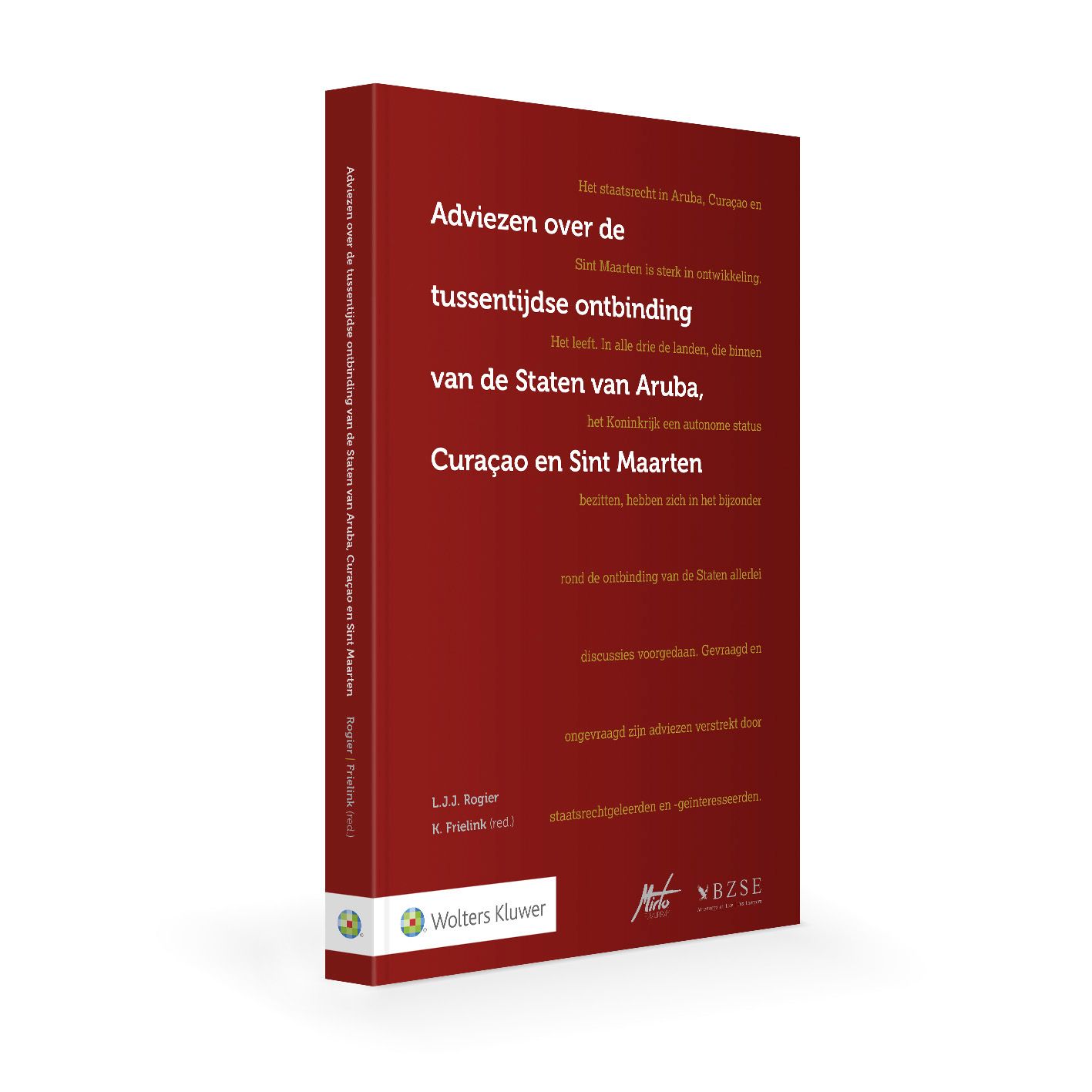
NIEUW BOEK STAATSRECHT ARUBA, CURACAO EN SINT MAARTEN
Bundel adviezen tussentijdse ontbinding Staten van Aruba, Curaçao en St. Maarten
 .
.
In dit door prof.mr Lodewijk Rogier en mr Karel Frielink verzorgde boek zijn de belangrijkste adviezen gebundeld die de afgelopen jaren zijn gegeven over de staatsrechtelijke crises in Aruba, Curaçao en Sint Maarten. De uitgave is uniek in zijn soort en sluit aan op de staatsrechtelijke ontwikkelingen in de drie landen.
In Aruba, Curaçao en Sint Maarten, die binnen …
Read the rest »
CARIBBEAN COURT OF JUSTICE ON UNJUST ENRICHMENT – PRESS RELEASE
CCJ orders Guyana to repay unlawfully collected environmental tax to CARICOM beverage companies
The Caribbean Court of Justice (CCJ) on May 9, 2017 ordered repayment of unlawfully collected environmental taxes charged by Guyana against SM Jaleel & Co Ltd (SMJ) and Guyana Beverages Inc. (GBI). Guyana’s main defence that it should not have to repay the monies because the Companies had passed on the tax to their customers was rejected by the Court. The Court however agreed with Guyana that the Companies could not claim reimbursement for the full period claimed (from 2006 to 2015) but had to limit their …
Read the rest »
EEN OVEREENKOMST MET HET LAND?
Let op de Comptabiliteitsverordening 1989
Uit een kort gedingvonnis van 26 januari 2017 van het Gerecht in Eerste Aanleg te Aruba (ECLI:NL:OGEAA:2017:54) blijkt nog maar weer eens dat de overheid (in dit geval het Land Aruba) niet (zomaar) is gebonden aan afspraken of toezeggingen als de daarvoor geldende regels niet in acht zijn genomen.
De eiser in deze zaak vorderde betaling van bepaalde bedragen van het Land Aruba, waarbij hij stelde dat het Land Aruba was tekortgeschoten in de nakoming van een tussen partijen gesloten overeenkomst van opdracht. Volgens eiser had hij met de adviseur van de Minister-President bepaalde afspraken …
Read the rest »
WET FINANCIEEL TOEZICHT IS ÉÉN GROTE PUZZEL GEWORDEN
Door de bomen het bos niet meer zien
In Het Financieele Dagblad van zaterdag 3 december 2016 staat een artikel over uiterst complexe wetgeving. De Nederlandse Wet op het financieel toezicht (Wft) is, zo blijkt uit dit artikel, ontspoord in goede bedoelingen. Zelfs een ogenschijnlijk simpele vraag als ‘hoe herken ik een bank’ is voor gespecialiseerde juristen een puzzel geworden. Er zijn inmiddels duizenden pagina’s wet- en regelgeving afkomstig van de Europese wetgever, de Nederlandse wetgever en de toezichthouders. De deskundigen roepen om een forse vereenvoudiging.
Toen de wet in ontwerp klaar was en de minister die wilde …
Read the rest »
ADVOCAAT EN ALGEMENE VOORWAARDEN
Rechter vernietigt beding
De meeste advocatenkantoren maken gebruik van algemene voorwaarden. Een kantoor in Nederland heeft de volgende – op zich niet ongebruikelijke – bepaling in zijn algemene voorwaarden staan:
Artikel 6
Onverminderd het bepaalde in artikel 6:89 BW, vervalt het recht op schadevergoeding in ieder geval 12 maanden na de gebeurtenis of het nalaten waaruit de schade direct of indirect voortvloeit en waarvoor het kantoor aansprakelijk is.
In een procedure tussen dat advocatenkantoor en een voormalige cliënt, vordert laatstgenoemde, met een beroep op het bepaalde in de artikelen 6:237 sub f en h BW, de algehele vernietiging van de algemene …
Read the rest »