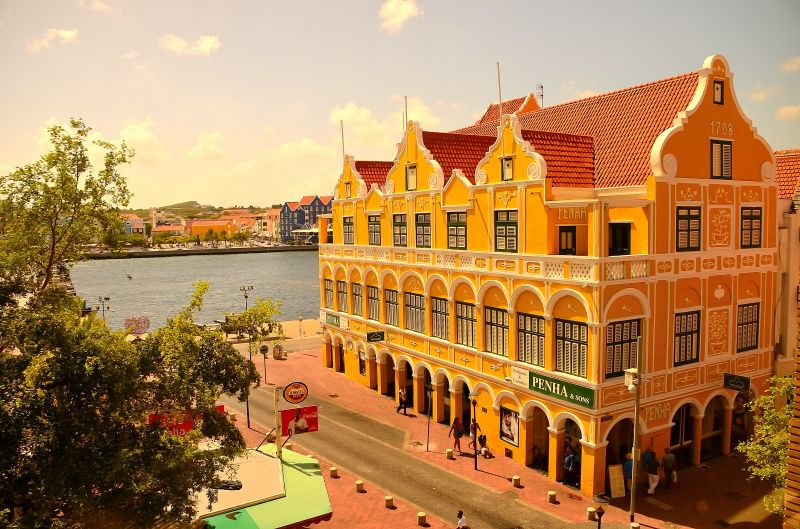
INQUIRY PROCEDURE INTRODUCED IN CURACAO

The Joint Court is the forum of choice for corporate disputes

As per January 1, 2012 the amended Corporate Code (Book 2 Civil Code) of Curacao entered into force. The new legislation introduces a so-called inquiry procedure for, amongst others, limited liability companies. The inquiry procedure (a.k.a. investigation proceedings) can result in a court ordered investigation into the affairs of a corporation.

Shareholders of such a corporation (i.e. an NV or BV) may file a petition with the Joint Court of Justice of Aruba, Curacao and St. Maarten, and of Bonaire, St. Eustatius and Saba (the ‘Joint Court’). Pursuant to Article 2:272 of the Corporate Code, the authority to initiate an investigation into the policy and affairs of a limited liability company is held (amongst others) by one or more share holders who represent at least ten percent of the company’s equity, or who may cast at least ten percent of the votes with respect to all matters. Also authorized to file such a petition are (a) the public prosecutor, in the general interest of, or upon the request of, an interested party, provided the request is based on urgent grounds; (b) the trustee in bankruptcy and (c) any person to whom this authority has been granted by the articles of corporation or in an agreement with the corporation.

The Joint Court can order an investigation into the affairs of the corporation (‘enquête’) if there are justified reasons to doubt the soundness or correctness of the corporation’s policies, and may take provisional measures as well, for example, the temporary transfer of (certain) shares to a nominee or the suspension of board members. Examples of justified reasons include allegations of violations of law, irregularities, conflicts of interest, deadlocks at board or shareholder level, disputes between board members and/or shareholders, and insufficient provision of information to shareholders.

If the Joint Court grants the request it will appoint one or more investigators who are authorized to access the corporation’s administration, books and premises. Current and former managing and supervisory directors as well as shareholders and employees are legally required to co-operate fully with the investigation (Article 2:277 of the Corporate Code of Curacao). The court appointed investigators will present their findings in a report submitted to the Joint Court.

If the Joint Court, upon request and based on the report, establishes a case of corporate misuse, it can, once again if so requested, order measures (most of them of a permanent nature), such as nullifying (board or shareholder) resolutions, suspending or dismissing board members, or the dissolution or division (either a split-up or a split-off) of the corporation (Articles 2:282 and 2:283 of the Corporate Code).

In the years to come the Joint Court will deal with many corporate governance issues and will play an important role in the resolution of various disputes concerning corporations. The Joint Court will become the forum of choice for litigating shareholders’ disputes, mismanagement matters, disputes between (managing and supervisory) directors and contests for corporate control. Hopefully, Aruba, St. Maarten and the BES Islands will introduce similar legislation soon.

Karel Frielink
Attorney (Lawyer) / Partner

(27 January 2012)
.

WILL 2012 BE A BETTER YEAR?

It depends on us!

What do you and I have in common? That we probably, just like all other people on earth, are descended from a people that lived in Africa in a far past. Thus considered we are all brothers and sisters. One big family, one big community, but not as closely and not as strongly connected as many of us would like it to be.

In the course of history differences have increased. Differences, for example, in appearance, in color, in language, in religion, in culture, in education, in prosperity etc. And with these differences, contradictions arose: between rich and poor, religious and non-religious, developed and underdeveloped, and, at an especially sad moment in history, also between slave and master, and between black and white. It is especially these contradictions that have left deep scars in history. The consequences are still visible today.

At various moments in history attempts have been made to protect people against arbitrariness of others. And time and again there have been people and movements that tried to take the intrinsic value and dignity of each individual as a basic principle. After the horrors of World War II, the United Nations General Assembly adopted the Universal Declaration of Human Rights. Unanimously.

The Universal Declaration of Human Rights (UDHR) starts off with a very fundamental assertion, namely that “recognition of the inherent dignity and of the equal and inalienable rights of all members of the human family is the foundation of freedom, justice and peace in the world”. But it is also laid down that every human being has duties to society. Only via rights and duties a free and full development of one’s personality is possible.

It is as much fundamental that it is laid down in the Universal Declaration that everybody is entitled to all these rights and freedoms, without distinction of any kind, such as race, color, sex, language, religion, political or other opinion, national or social origin, property, birth or other status (art. 2 par. 1 UDHR). As soon as a government proposes a policy or law in which, in regard to these fundamental rights and freedoms, distinction should be made based on these criteria, there is reason to worry.

We all should watch government behavior. Every person needs contradiction (the same applies to rulers), every human being must allow criticism and must remain in debate. If rulers may not be contradicted, they become, as Montesquieu has already indicated, quite naturally, corrupt. We all should stand by those who, for instance, suffer from oppression or experience discrimination. And our goal should be to jointly collaborate in order to contribute to a better and more just world.

Karel Frielink

(9 January 2012)

.

FINAL POSTING OF 2011

What a year!

This will be my final posting for 2011. What a year. It feels as if the whole world has changed more rapidly than ever before and not only as a result of the Arabic Spring and the economic turmoil.

The year 2012 is about to begin and it won’t be an easy year. Many will suffer from the crisis and many will keep suffering from oppression, diseases and natural disasters. There still will be tensions between countries and populations. There still will be war. However, new faces and new voices in the political arena may change things for the better. Let’s hope so.

I wish you all a happy and prosperous new year. Bon aña nobo i tur kos bon!

Karel Frielink
Attorney (Lawyer) / Partner

(29 December 2011)
.

CORPORATE GOVERNANCE AND BAD HABITS

Letter to the editor of The Daily Herald

Dear Editor,

According to Leroy de Weever (DP), he doesn’t need a Corporate Governance Council to come tell him how to do his job. He wants to disband the Corporate Governance Council as soon as possible.

Corporate governance rules were designed to protect companies from politicians, in particular from the government. Government-owned companies should be kept out of the political sphere as much as possible, so that they may benefit from commercial, businesslike and market-oriented management. In doing so, they also run less of a risk of being milked or used as political toys.

One would expect the St. Maarten government and Members of Parliament to adhere to the principles of good corporate governance as laid down in the St. Maarten legislation and as promoted by the Organisation for Economic Cooperation and Development (OECD). In 2005, the OECD issued the “Guidelines on Corporate Governance of State owned Enterprises.” According to the OECD:

The State should act as an informed and active owner and establish a clear and consistent ownership policy, ensuring that the governance of the state-owned enterprises is carried out in a transparent and accountable manner, with the necessary degree of professionalism and effectiveness.

Not much to my surprise, several politicians announced that they are in favour of entirely disbanding the Corporate Governance Council (and related legislation), in order to be able to gain political control again. They want more, rather than less, political influence on state-owned entities. These politicians want to continue appointing their friends or other persons they consider loyal to their party instead of loyal to the public at large, without being supervised any longer. Bye-bye good corporate governance and hello to opportunities for misuse.

If the Council is to be disbanded, the people at least should demand full transparency and independent supervisory directors. The St. Maarten Corporate Code provides for two different kinds of boards of supervisory directors: a “regular” board of supervisory directors and the so-called “independent” board of supervisory directors (Section 2:139 Civil Code). Within this context, the word independent means that the supervisory directors are independent of the shareholders, interest groups and to a certain extent from the shareholders’ meeting.

An independent board of supervisory directors has its own responsibility and function without a mandate and/or without having to consult those who appointed them. They are appointed in the interest of the company, as such, and the associated companies, thus for the stakeholders in general.

According to the Explanatory Memorandum to the St. Maarten Corporate Code, an independent board of supervisory directors is well suited for application in the financial sector. An independent supervisory board is also usually opted for by large companies. It goes without saying that such an independent board should be mandatory for government-owned or government-controlled entities.

One of the central challenges is how to restore the government’s integrity. It has become a bad habit to replace managing directors and supervisory directors each time the island government changes party. That bad habit still exists. It must be changed!

Karel Frielink

(December 22, 2011)

See also Roeland Zwanikken (BZSE) on the same subject.

.

APPELLATE PROCEEDINGS IN THE DUTCH CARIBBEAN

Full review of the case

Appellate proceedings in the Dutch Caribbean provide for a full review of the appealed decision: the grounds on which the Appellate Court can reverse the original judgment are not, as in certain other jurisdictions, limited to procedural matters. It is furthermore permissible to introduce new documentary evidence in the course of appellate proceedings. If the appealed judgment contains a final decision as regards the dispute the Appellate Court will either confirm the judgment or it will itself render a replacing decision: the case will not be referred back to the Court of First Instance.

Furthermore, the examination of witnesses may be ordered by the Appellate Court at the request of one of the parties if the facts sought to be proven are material to the case. The Appellate Court may also order the examination of witnesses on its own initiative.

Karel Frielink
Attorney (Lawyer) / Partner

(21 December 2011)
.

KERSTTOESPRAAK 2011

Respect

Van de woorden die hier op Curacao veel worden gebruikt behoren ‘integriteit’ en ‘respect’ ongetwijfeld tot de toppers. Over integriteit wil ik vandaag niets zeggen. Maar wel over het begrip ‘respect’.

Er zijn veel gevallen waarin van ons respect wordt verlangd: respect voor het leven, respect voor een taal, cultuur of mening, respect voor de medemens, respect voor de rechter, juf of meester, respect voor dieren, respect voor eigendommen van een ander, enzovoort.

Het begrip ‘respect’ heeft diverse betekenissen:

 Aanzien
 Gevoel van bewondering
 Ontzag
 Eerbied
 Waardering

Tegen de achtergrond van deze betekenissen dringt zich de vraag op hoe je zou kunnen aankijken tegen de veelvuldig gehoorde uitspraak: “Ik eis respect voor mijn volk, mijn taal en mijn cultuur!”.

De ‘eis’ doet denken aan de lijfspreuk van de Romeinse Keizer Tiberius Julius Caesar: “Oderint dum probent” (men mag mij haten, als ik maar word gerespecteerd).

Respect in deze zin lijkt niet zozeer op vrijwilligheid te zijn gebaseerd, maar min of meer te worden afgedwongen. Dat afdwingen gebeurt dan door dreigementen van iemand die macht heeft, of kracht, waardoor bij de ander angst, of ontzag of gevoelens van minderwaardigheid worden gecreëerd. Wanneer men in dit soort situaties over ‘respect’ wil praten is duidelijk dat niet sprake is van gelijkwaardigheid. Degene die respect eist, is of voelt zich dominant ten opzichte van de ander. Het respect dat in dit soort situaties wordt afgedwongen heeft geen oprecht karakter en wordt ook niet diep emotioneel gedragen.

Dit afgedwongen respect vertoont enige gelijkenissen met het aangeleerde respect. In onze opvoeding hebben wij daar allemaal wat van meegekregen, al is duidelijk dat dit soort respect tijd-, plaats- en cultuurgebonden is. Wie heeft er als kind niet geleerd om respect te hebben voor oudere mensen of voor meneer pastoor? Bij aangeleerd respect wordt als het ware geprogrammeerd gedrag vertoond, waardoor je je bijna automatisch inhoudt of beheerst tegenover de oudere medemens of meneer pastoor. Bij de ene mens wordt dit respect wel diep emotioneel gedragen en bij de ander niet.

Het respect dat ons het meeste zal aanspreken is het menselijke respect, dat min of meer spontaan ontstaat. Het wordt veelal geassocieerd met een gevoel van verbondenheid en sympathie. Het menselijke respect komt voort uit het waarnemen van de ander en het besef dat die ander een mens is even wezenlijk als wij zelf zijn, en in onze beleving wellicht zelfs meer of beter.

Er zijn nog andere manieren waarop naar het begrip ‘respect’ kan worden gekeken. Respect kan betrekking hebben op een individu dat door bepaalde eigenschappen of handelingen op onze eerbied en bewondering kan rekenen. In dat verband hoor je wel eens de uitspraak dat je respect niet kunt eisen, maar moet verdienen. Dat ‘verdienen’ zou kunnen suggereren dat het om berekenend gedrag gaat, maar dat is bepaald niet noodzakelijk. Negatief geformuleerd gaat het om respect dat niet door pure macht of fysieke kracht wordt afgedwongen, noch voortkomt uit aangeleerd gedrag. Denk bij dit soort respect aan Nelson Mandela, moeder Theresa, Ghandi en Martin Luther King. Zij kregen en krijgen respect om wat zij deden.

Op een meer abstract niveau speelt het begrip respect een rol bij de erkenning en bescherming van de menselijke waardigheid. Die waardigheid mag niet worden aangetast en geniet bescherming. Anders gezegd: de mens als mens verdient respect, ongeacht de onderlinge verschillen. Slavernij en racisme, om maar twee voorbeelden te noemen, zijn in strijd met de menselijke waardigheid. Het respect voor en de eerbiediging van de menselijke waardigheid staan er uiteraard niet aan in de weg dat straffend wordt opgetreden tegen de medemens die wetten of mensenrechten schendt: integendeel zelfs! Het recht op respect kan in dit verband niet los worden gezien van de plicht tot respect. Op dit niveau komen we alle vormen van respect tegen, van afgedwongen respect en aangeleerd respect, tot menselijk respect. En helaas ook het ontbreken van respect.

In de ideale wereld voelt ieder mens zich verbonden met alle medemensen en is solidariteit een natuurlijk gegeven. In de imperfecte wereld waarin wij leven zijn sturingsmechanismen nodig om corrigerend op te kunnen treden wanneer het gebrek aan respect leidt tot bijvoorbeeld aantasting van de menselijke waardigheid.

Respect betekent oorspronkelijk ‘omzien naar’, en geeft aan dat iemand rekening houdt met een ander. Dat is dus iets dat uit jezelf moet komen. Wie respect van anderen wil, doet er verstandig aan om zijn medemensen op een positieve manier tegemoet te treden en deze medemensen in hun waarde te laten. Hun waardigheid te respecteren. Degene die daartoe niet in staat is, begrijpt waarschijnlijk ook maar weinig van de diepere betekenis van het Kerstfeest: omkijken naar en compassie hebben met de medemens!

Ik wens iedereen een Bon Pasku, een veilige jaarwisseling en alvast een heel mooi nieuw jaar.

Karel Frielink

(20 december 2011)

Zie ook het Antilliaans Dagblad van 22 december 2011.

.

ERIC GARCIA: CURACAO NOT READY FOR INDEPENDENCE

VBC Lunch Lecture Held Wednesday, December 14, 2011

According to Eric Garcia (CEO Girobank) “we need to be honest and acknowledge the fact that we are simply not ready for independence. Neither financially nor politically. Instead of continuously focusing on independence, our government should deal with the many macro-economic challenges our country is facing at this moment. Curacao’s growth has been lagging behind other countries in the Caribbean. Our poor economic performance is accompanied by a high unemployment rate, particularly among the youth. However, it seems as if our politicians do not perceive the low economic growth and high unemployment rate as major problems which, if not tackled, will lead to increased poverty and crime rates.

The macro-economic challenges, which demand serious actions from the Curacao government, are: improving our competitiveness in order to stimulate sustainable economic growth, increasing our labor productivity, strengthen our main export sectors and reforming the system of social security.

Garcia: “For that, we need politicians who have the knowledge, courage and perseverance to take the necessary measures on the short term, as unpopular as some of these measures may be.

Click here to read the full lecture.

(15 December 2011)

.

INSURANCE BUSINESS IN ARUBA (II)

Different insurance contracts

According to the SOSIB a “life insurance agreement” is an insurance contract concerning the payment of cash benefits related to the life or death of man, and a “general insurance contract” is an insurance contract, other than a life insurance contract.

Generally, an insurance contract is understood to be an agreement whereby an insurer commits itself to the insured, against receipt of a premium, to compensate the latter for a loss, damage or loss of expected advantage which the insured could suffer as a result of an uncertain event.

There is no existing case-law or regulatory directive in Aruba offering any direct guidance as to the question whether a variable annuity constitutes an insurance product. We feel there is a strong argument that where the annuity pays out beginning at a certain date but not necessarily based on an event of loss, damage or expected disadvantage (e.g. it is not a death or disability benefit but merely an investment that pays out in the future) and where the amount of payout varies based on the value of the assets (foreign securities) purchased in the annuity, this type of variable annuity would be a security rather than an insurance product. If there is a death benefit or a payout based on an uncertain event (contingency), this argument becomes more difficult based on the aforementioned definition.

Karel Frielink
Attorney (Lawyer) / Partner

(14 December 2011)

.

INSURANCE BUSINESS IN ARUBA (I)

The Central Bank of Aruba is the regulator

The Central Bank of Aruba supervises insurers incorporated in Aruba and the branches and agencies in Aruba of insurers incorporated outside Aruba based on the State Ordinance on the Supervision of the Insurance Business (SOSIB).

The SOSIB, effective since 2001, stipulates that life and non-life insurance business must be carried out by separate legal entities. The Central Bank of Aruba shall decide whether an action or a combination of actions does or does not constitute as being engaged in the life insurance business or the general insurance business, and whether an action or a combination of actions does or does not constitute as being engaged in the insurance business from an establishment in Aruba.

Except for anti-money laundering regulations, there is no regulatory system in place with respect to insurance brokers. However, supervision of insurance brokers is included in the draft of the revised SOSIB.

Without a license from the Central Bank it is prohibited to approach any member of the public in or from Aruba regarding the direct or indirect engagement in the insurance business. If an insurer domiciled abroad intends to perform his activities in Aruba by means of a representative, it shall appoint a natural person or legal entity residing or domiciled, respectively, in Aruba (Section 1(1) State Decree Representative Insurance Companies).

Karel Frielink
Attorney (Lawyer) / Partner

(5 December 2011)

.

CREDIT INSTITUTIONS IN ARUBA

A license is required

According to Section 4 of the Aruba State Ordinance on the Supervision of the Credit System 1998 (SOSC), no enterprise or institution established in Aruba shall pursue the business of a credit institution unless it has obtained authorization to that end from the Central Bank. No enterprise or institution established outside Aruba shall pursue the business of a credit institution through a branch in Aruba, unless it has obtained authorization from the Central Bank to do so (Section 24(1) SOSC).

A “credit institution” under the SOSC means an enterprise or institution, not being an institution established by (an Aruban) State Ordinance, whose business is to receive funds repayable on demand or subject to notice being given, and to grant credits or investments for its own account (Section 1 SOSC). Only companies with an establishment, branch-office or representative office can obtain authorization to pursue the business of a credit institution, i.e. they must have some kind of permanent presence from which the business of a credit institution is pursued.

The SOSC prohibits any natural person or legal entity (other than a registered credit institution) from approaching the public (i) in order to attract funds in the course of his or its occupation or business which funds in total or for each case of separate attraction, respectively, are below an amount to be decided by Ministerial regulation, or (ii) in order to grant credits in the course of his or its occupation or business, or (iii) in order to act as an intermediary in any way in these cases (Section 48(1) SOSC). According to a Ministerial regulation of April 16, 2009, the amount below which it is prohibited to approach the public, either directly or indirectly, for the purpose of attracting funds in the course of one’s occupation or business is Afl. 1 million (approximately US$ 560,000).

Karel Frielink
Attorney (Lawyer) / Partner

(29 November 2011)

.